
Renting out a unit in a body corporate building in Queensland.
Renting out a unit in a Queensland body corporate building works like any other tenancy, with one more rule book. The building's by-laws become terms of the lease, so your tenant has to follow them and must get a copy with the agreement to sign. The body corporate looks after the common property and you pay its levies, but your tenant reports repairs to you, even when the body corporate has to fix them.

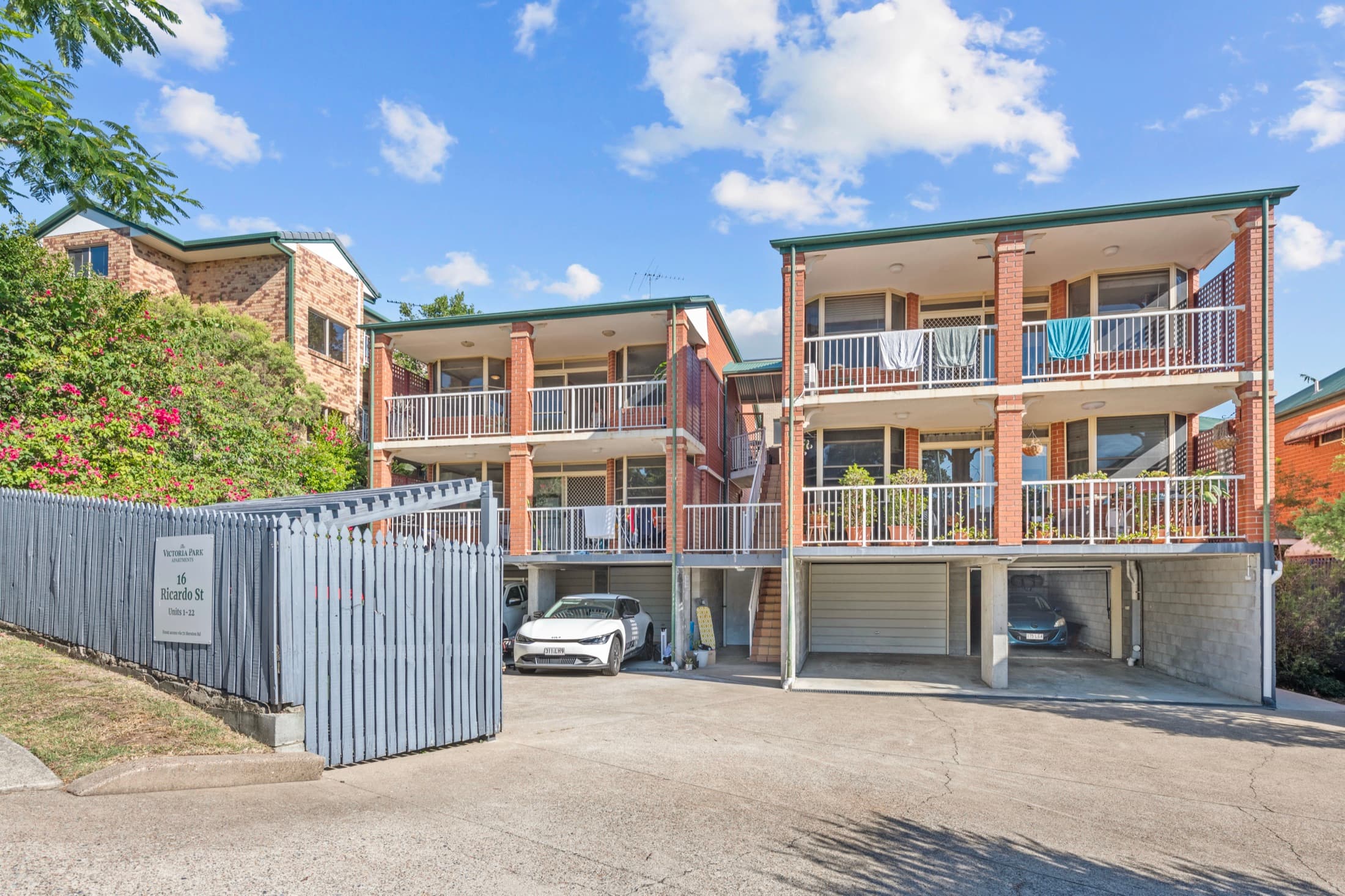
This guide covers community titles schemes under the Body Corporate and Community Management Act 1997 (the body corporate Act), which is how most Queensland bodies corporate are set up (About regulation modules). A building with no community management statement comes under other Acts, so some answers here won't apply. The Office of the Commissioner for Body Corporate and Community Management (the Commissioner's office) publishes guidance on the Act and runs its dispute service (BCCM services).
The by-laws are part of the lease
By-laws are the building's rules for using the lots and the common property. They can cover noise, smoking, pets, parking and how the building looks (RTA). Under section 52 of the Residential Tenancies and Rooming Accommodation Act 2008 (the tenancy Act), the by-laws in force that apply to your tenant's occupation are terms of the tenancy agreement, even where the agreement doesn't repeat them. That includes a by-law the body corporate adds later, once it takes effect, so send your tenant any change.
A by-law breach is therefore a breach of the lease. You or your property manager can respond with a Notice to remedy breach (Form 11), the same notice our rent arrears guide walks through. The body corporate can act too: it can give your tenant a contravention notice, and it must give you a copy at the same time or as soon as practicable after (section 183A of the body corporate Act). It can't evict your tenant, though. Whether a breach goes any further is your call, under tenancy law (Renting in a body corporate).
Some things no by-law can do. Section 180 of the body corporate Act says a by-law can't stop you leasing the unit and can't discriminate between tenants and owner-occupiers; the Act's own example is a by-law keeping tenants out of the pool. Even so, a by-law that looks invalid still applies until an adjudicator rules on it (Making by-laws). Smoking is a common one to check: a by-law can ban it on balconies and other outdoor parts of a lot (section 169A), but not inside the unit itself.
Before one of our units is advertised, we check its by-laws on pets, parking and noise.
Starting a lease: step by step
- Get the current by-laws. They sit in the building's community management statement, which Titles Queensland supplies on request but not online. If the scheme was registered before July 1997, the statement may be a single page that doesn't list them, so ask the body corporate for the full set (What by-laws apply).
- Give the tenant a copy with the lease. Section 69 of the tenancy Act requires it when the agreement goes to the tenant for signing, with a maximum penalty of 20 penalty units, or $3,454 at the 2026-27 value. Item 17 of the standard agreement records whether by-laws apply and whether the tenant has them. A renewal with the same tenant doesn't need a new copy.
- Hand over every key. Each tenant named on the lease must get a key for every lock on the way into the unit, the building and its grounds, such as a boom gate, and one of them must also get the keys to the unit's other locks, such as the mailbox (section 210). Write the car space into the lease at the same time.
- Tell the body corporate about the lease. For a lease of six months or more, you must give the body corporate written notice of the tenant's name and address and the lease term within a month of the lease starting (Commissioner's office). Section 223 of the Body Corporate and Community Management (Standard Module) Regulation 2020 also requires written notice within a month when a lease with six months or more to run is transferred or ended, and when you appoint an agent to let the unit or that appointment ends.
The regulation's section numbers in this guide come from that Standard Module, which applies wherever a scheme hasn't adopted another module. Your community management statement names the one your building uses (section 66).
Levies and water
The body corporate sets each owner's levies, which the law calls contributions, for the financial year from its budgets (section 162). They fund two accounts: an administrative fund for running costs such as insurance and routine maintenance, and a sinking fund for capital items such as repainting. A cost the budget doesn't cover can bring a special levy. You get written notice at least 30 days before each payment falls due. The body corporate may offer up to 20% off for paying on time, and may charge interest of up to 2.5% a month on late payments (sections 163 to 165).
None of these can be passed on to your tenant. Section 163 of the tenancy Act makes the landlord pay all charges, levies, premiums, rates and taxes for the premises other than service charges, and the standard agreement lists body corporate levies, council general rates and land tax among its examples.
Water usage is a service charge, so the tenant can be charged for it, but only if the unit has its own meter or sub-meter, the lease says so and you pass on each bill within 4 weeks. Where the fittings aren't water efficient, only usage above a reasonable amount can be charged. Sewerage and fixed water charges always stay with you (RTA water charging rules). Many schemes built before 2008 have no meter for each unit. Their water is usually billed to owners by lot entitlement or through the levies, and the tenant can't be charged for it (body corporate Act, section 196; Common Ground).
Rising levies don't change what the tenant owes. Any recovery has to come through the rent, which can rise only once in any 12 months, as our guide to Queensland rent increases explains.
Pets need two approvals
A tenant who wants a pet needs your approval and, where the by-laws require it, the body corporate's as well (section 184B). They are separate decisions, and one doesn't stand in for the other. Neither approval is needed for a guide, hearing or assistance dog that a tenant with a disability relies on (body corporate Act, section 181).
During a tenancy, the tenant asks you on Form 21, and you must answer in writing within 14 days or the pet is taken to be approved. You can refuse only on grounds the tenancy Act lists, and one of them is that keeping the pet would breach a by-law (sections 184D and 184E).
By-laws can't ban animals or limit their number, type or size, but they can require the body corporate's written approval, which may come with reasonable conditions such as a leash in the lift (section 169B). The body corporate can refuse only on grounds the Act lists, such as an unacceptable health or safety risk that conditions can't manage, and refusing because no pets are allowed is unreasonable in law. A committee that doesn't decide within 21 days is taken to have approved the request. Where the decision is for a general meeting, the meeting must be called within 21 days and decide within 6 weeks of its notice, or the request is approved in the same way (sections 58A, 58B, 82A and 82B).
The two clocks don't line up. If your 14 days are nearly up and the body corporate hasn't answered, you can refuse, and the tenant can apply again once the body corporate says yes (RTA pet rules). The Commissioner's office suggests the tenant asks the body corporate first. One trap remains: a registered by-law that still bans pets binds the committee even though it breaches the Act, so no pet can be approved until owners change it by special resolution or an adjudicator rules it invalid (guide to animals).
Parking
The body corporate Act doesn't set parking rules for a scheme. Where and when people can park on common property is set by the by-laws or the building's signs, and visitor bays are for genuine visitors only (parking fact sheet). A unit's space may be part of the lot itself, or common property the lot has exclusive use of under a by-law (section 170).
That difference matters when someone takes your tenant's space. If the space is part of your lot, you deal with the vehicle's owner directly. If it's an exclusive use space, you ask the body corporate to enforce the by-law. The body corporate can also have a car parked on common property in breach of the by-laws towed, where towing laws allow it (section 163A).
Short stays
Going by decisions of QCAT and its own adjudicators, the Commissioner's office says by-laws in a community titles scheme can't ban or restrict short stays. The same section 180 that protects your right to lease also says that if a lot may lawfully be used for residential purposes, by-laws can't restrict the type of residential use. On that basis QCAT upheld an adjudicator's order that a motion to stop lettings of under six months was invalid. In another scheme, an adjudicator ordered the removal of a by-law requiring consent for leases of under three months (Common Ground, December 2023). If your building has recorded a by-law like that anyway, it binds until an adjudicator rules it invalid. In a scheme still under the older Building Units and Group Titles Act 1980, the District Court upheld a by-law against lettings of under a month (Fairway Island decision).
What by-laws can do is regulate how common areas and facilities are used, for example by setting hours for the pool. The council's planning scheme and the building's development approval can also affect short stays, so check both before you switch. And if short-stay use is likely to push up the body corporate's insurance premium, you must give it details of that use (section 207).
Who fixes what
Who maintains what depends on the survey plan the scheme is registered under, which Titles Queensland can supply. Unit blocks are usually on a building format plan, where each lot's boundary runs through the middle of its walls, floor and ceiling. On those plans the split usually runs like this (building format plan maintenance; section 180 of the Standard Module):
| Part of the building | Usually maintained by |
|---|---|
| Driveways, gardens, pools and other shared facilities | Body corporate |
| Exterior, roof and foundations, and the structure of load-bearing walls | Body corporate |
| Roofing membranes, including under a balcony that roofs another unit | Body corporate |
| Balcony balustrades and railings on the lot boundary | Body corporate |
| Doors and windows in a wall between the unit and common property | Body corporate |
| Pipes and wiring on common property, in a boundary wall or floor, or serving more than one unit | Body corporate |
| The building's fire safety equipment, such as exit lights and sprinklers | Body corporate |
| Fixtures and fittings, floor coverings, internal paint and plaster | Owner |
| Doors and windows onto a balcony that is part of the lot | Owner |
| The shower tray and waterproofing in wet areas | Owner |
| A hot water system or air-conditioner serving only your unit, even on common property | Owner |
| Smoke alarms inside the unit (see our smoke alarm guide) | Owner |
| A car space or courtyard under an exclusive use by-law | Owner, unless the by-law says otherwise |
Townhouse complexes are often on a standard format plan instead. There the owner generally maintains the whole building on the lot, roof, exterior walls and foundations included (standard format plan maintenance).
When the fault is in common property
Your tenant reports the fault to you or your property manager, and you take it up with the body corporate (RTA guidance). Your obligation to the tenant doesn't stop there. For your repair duties under section 185 of the tenancy Act, the premises include any common area the tenant can use with the unit. And a serious fault in a lift, staircase or other common area that unduly inconveniences the tenant in getting in or using the unit is an emergency repair (section 214).
Put the request to the body corporate in writing. Tenants can write to it directly as well, and if a request stalls, you can put a motion asking for the work. The minimum housing standards can turn on the body corporate too. Being weatherproof and structurally sound, for instance, may depend on work that is the body corporate's to do, and the Commissioner's office says owners and bodies corporate need to work together on them (guidance for owners and tenants).
Other compliance can run through the body corporate as well. When we took on a two-bedroom unit in Capalaba, the shared pool had no current safety certificate, and fixing that meant working with the body corporate. Our management service sets out how tenants report repairs to us, after hours included.
Insurance: the building policy and your own
The body corporate must insure the common property and its assets for full replacement value and hold public risk insurance of at least $10 million. Where lots are on a building format plan, it must also, in most cases, insure each building containing a lot for full replacement value (sections 197, 198 and 206). On a standard format plan it insures buildings that share a wall, and the owner of a free-standing house or townhouse insures it unless they join a voluntary scheme the body corporate runs (compulsory insurance).
The building policy doesn't have to cover everything in your unit. The regulation's definition of a building leaves out carpet, curtains and blinds, temporary floor, wall and ceiling coverings, fixtures a tenant can remove, an air-conditioning unit serving one lot, and appliances that aren't wired or plumbed in (section 195). Every owner is responsible for insuring their own contents (insurance fact sheet), and nothing in the regulation requires the body corporate to insure your rent.
The notice of each annual general meeting, or a note with its budget, must state the insurer, the amount and type of cover, the premium, the excess and the expiry date (section 196). Read it before you choose a landlord policy, so yours picks up what the building policy doesn't. Check for flood in particular: the Commissioner's office notes that flood cover is not always part of a standard policy, and our guide to flood risk and rentals lists the questions to put to an insurer.
If you upgrade the unit's fittings to a higher standard than the rest of the building, and that's likely to lift the premium, give the body corporate details of the work and its value as soon as practicable after it's finished. An owner who doesn't can end up paying for repairs the insurance won't cover (section 202).
When there's a dispute
A dispute between you and your tenant is a tenancy matter. Most must go through the RTA's free dispute resolution service before QCAT will hear them, though urgent applications, such as one to end a tenancy because of damage, can go straight to QCAT (RTA disputes; tenancy Act, section 416).
Disputes with the body corporate (its committee's decisions included) or with another owner or occupier go to the Commissioner's office (section 227). First, try to settle it yourself, preferably in writing. Then apply for conciliation, where a Department of Justice conciliator helps both sides try to reach an agreement. If that fails, you can apply for an adjudicator's order (conciliation). From 1 July 2026, a conciliation application costs $117.90, and adjudication costs $117.90 for a final order or $247.90 with an interim order as well (fees).
Your tenant can lodge against the body corporate too, for example over a refused pet. For general questions, the Commissioner's office runs a free information service on 1800 060 119, though it can't give legal advice or rulings.
General information for Queensland landlords, current at the last reviewed date above. It is not legal, tax or financial advice; check the cited sources or speak to the Residential Tenancies Authority (1300 366 311) or a lawyer for your situation.
Common questions.
Can I claim body corporate levies as a tax deduction?
Generally yes, for the regular levies. The ATO treats regular payments to the administrative fund and the general sinking fund as deductible in the year you incur them, and if you also use the unit yourself, you claim only the rental share. A special levy raised for a particular capital improvement isn't deductible, although the finished work may qualify for a capital works deduction. Your accountant can confirm how this applies to you (ATO).
Can the body corporate enter my unit while it's tenanted?
Yes, to inspect or carry out work it is authorised or required to do. Outside an emergency, the person it authorises can enter only at a reasonable time and after at least 7 days' written notice, which goes to your tenant as the occupier. In an emergency it can enter at any time, with or without notice, and obstructing an authorised person is an offence (body corporate Act, section 163).
My tenant wants to put something up. Does the body corporate have to approve it?
If body corporate law or the by-laws require its approval for a fixture or structural change, yes, on top of yours. The tenant asks you on Form 23. Within 28 days of receiving it you decide and, if you agree, pass the request to the body corporate, telling the tenant your approval depends on its decision. You then let the tenant know the outcome as soon as you can (tenancy Act, section 207).
Who pays the insurance excess if a leak from my unit damages the one below?
The body corporate by default, because more than one lot is affected, but it can decide it's reasonable for you to pay some or all of it (section 203). Adjudicators look at who had to maintain whatever failed: an owner whose flexi hose burst and flooded eight other lots was left with the excess (Common Ground, Issue 44). If only your unit is damaged, you pay unless the body corporate decides that's unreasonable.
Can the body corporate fine my tenant?
Not through the by-laws: a by-law can't make an owner or occupier pay money, apart from the owner's payments under an exclusive use by-law (section 180(6)). What the body corporate can do is give your tenant a contravention notice. Ignoring one is an offence: the body corporate can take it to the Magistrates Court, where the maximum penalty is 20 penalty units, or to the Commissioner's dispute service (section 182).
Find out what your unit would lease for
We'll compare your unit with recent leases of similar homes nearby and tell you what would move the rent. Ask for a free rental appraisal, or compare our fees first.